
 Español
 Portugues
 Pусский
 Français
 Deutsch
 日本語
日本語 한국어
한국어 العربية
 Italiano
 Nederlands
 Svenska
 Polski
 ไทย
ไทย Türk dili
 हिन्दी
 Indonesia
 Tiếng Việt
 עִברִית
 čeština


High Frequency Transformer
A High Frequency Transformer is an electrical device designed to transfer alternating current energy between circuits at elevated switching frequencies. Unlike traditional power transformers that operate at the standard mains frequency of 50 Hz or 60 Hz, high frequency transformers are commonly used in applications where the input signal is switched at tens of kilohertz or even higher. Because of this operating principle, they can be much smaller, lighter, and more efficient for certain power conversion systems.The basic function of a high frequency transformer is to provide electrical isolation, voltage step-up or step-down, and efficient power transfer. It is widely used in switching power supplies, inverters, converters, battery charging systems, telecommunications equipment, industrial control systems, and various electronic devices. By operating at a higher frequency, the transformer can use a smaller core and fewer turns of wire while still handling the required power. This results in reduced size and weight compared with low-frequency transformers.The core material is one of the most important features of a high frequency transformer. Ferrite is commonly used because it has low eddy current losses and good magnetic properties at high frequencies. The windings are usually made of copper wire or litz wire, depending on the current and frequency requirements. Careful insulation design is necessary to maintain safety and prevent breakdown between primary and secondary windings. In many designs, the transformer must also meet strict thermal and electromagnetic compatibility requirements.High frequency transformers are valued for their high efficiency and compact structure. In modern power electronics, efficiency is critical because it helps reduce energy loss, heat generation, and the need for large cooling systems. The smaller physical size also makes it easier to integrate the transformer into compact electronic equipment. However, designing such a transformer is more complex than designing a conventional low-frequency one. Engineers must consider leakage inductance, parasitic capacitance, core saturation, switching losses, and heat dissipation. These factors influence performance, reliability, and overall cost.Another important advantage of a high frequency transformer is its ability to support advanced circuit topologies. In resonant converters, flyback converters, forward converters, and full-bridge power supplies, the transformer plays a central role in controlling energy flow and maintaining stable output voltage. It can also improve safety by isolating the input and output sides of a system, protecting users and sensitive components from electrical faults.In summary, a high frequency transformer is a key component in modern electronics and power conversion technology. Its ability to operate efficiently at high switching frequencies makes it essential for compact, lightweight, and energy-saving designs. Although it requires careful engineering and material selection, its benefits in performance, safety, and size make it an important part of many electrical and electronic systems.
Products
Category:
-
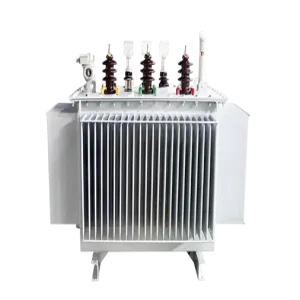
fully -sealed -transformer
Category: Oil-Immersed TransformerBrowse number: 576Number:Release time: 2026-09-24 10:32:45This oil-immersed three-phase transformer is a high-efficiency power distribution device for industrial, commercial and municipal grid systems. Featuring 315kVA–31500kVA capacity and 380V/400V output, it adopts premium core and copper/aluminum coil structure. With reliable oil cooling insulation, low loss, low noise and strong environmental adaptability, it delivers stable, durable and energy-saving operation with full ISO9001 and CCC quality certification.
News
Category:
No search results found!
Case
Category:
No search results found!
Video
Category:
No search results found!
Download
Category:
No search results found!
Job
Category:
No search results found!
Featured Products
No search results found!



 Phone
Phone