
 Español
 Portugues
 Pусский
 Français
 Deutsch
 日本語
日本語 한국어
한국어 العربية
 Italiano
 Nederlands
 Svenska
 Polski
 ไทย
ไทย Türk dili
 हिन्दी
 Indonesia
 Tiếng Việt
 עִברִית
 čeština


DC charging stack
A DC charging stack is a compact and highly integrated power conversion system used in fast electric vehicle charging. Its main purpose is to convert electrical energy from the AC grid into regulated DC power that can be delivered directly to an EV battery. Compared with conventional AC charging, a DC charging stack enables much faster charging because the conversion happens inside the charging equipment rather than inside the vehicle.A typical DC charging stack is composed of several functional modules, including an input stage, power conversion units, control circuitry, protection devices, thermal management components, and communication interfaces. The input stage receives three-phase AC power from the grid and passes it through filtering and protection elements to improve power quality and ensure safe operation. After that, the power is converted by rectifier and DC-DC conversion stages into a stable output voltage and current suitable for different battery types and charging requirements.Modularity is one of the most important features of a DC charging stack. In many designs, the system is built from multiple power modules that can operate in parallel. This structure makes the charging stack flexible, scalable, and easier to maintain. If one module fails, the system can often continue working with reduced capacity, which improves reliability and uptime. It also allows operators to expand charging power by adding modules as demand increases.The control system plays a key role in coordinating all parts of the charging stack. It monitors voltage, current, temperature, insulation status, and communication signals in real time. Based on these inputs, it adjusts the output to match the battery charging profile, such as constant current or constant voltage modes. Advanced control functions help improve efficiency, reduce losses, and protect both the charger and the vehicle battery from overvoltage, overcurrent, overheating, and other abnormal conditions.Thermal management is another critical aspect. Because DC fast charging involves high power levels, significant heat is generated during operation. Cooling methods such as forced-air cooling or liquid cooling are often used to maintain safe temperatures and stable performance. Proper thermal design helps extend component life and supports continuous high-power charging.A DC charging stack must also support communication with the electric vehicle. Through standardized protocols, it exchanges information with the vehicle’s battery management system to confirm charging readiness, request limits, and ensure safe energy transfer. This communication process is essential for compatibility, safety, and efficient charging.In modern energy systems, DC charging stacks are becoming increasingly important. They support public fast-charging stations, fleet depots, commercial parking areas, and highway charging networks. Their high efficiency, flexible design, and rapid charging capability make them a core technology for the growth of electric mobility.
Products
Category:
-
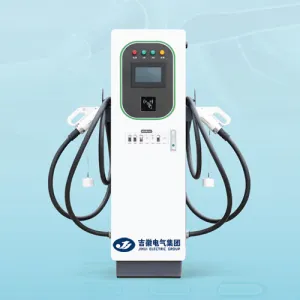
DC charging stack (rectifier cabinet)
Category: DC charging stationBrowse number: 1030Number:Release time: 2026-10-18 08:59:47The flexible DC split type charging stack consists of a charging stack rectifier cabinet and charging stack terminals: it is a modular configuration. The charging pile adopts flexible charging power allocation technology, which can intelligently allocate power according to the charging needs of new energy vehicles, intelligently identify high and low voltage, and automatically allocate output power to meet the charging needs of various vehicle models and different powers. Any DC module can be adjusted to any charging pile.
News
Category:
No search results found!
Case
Category:
No search results found!
Video
Category:
No search results found!
Download
Category:
No search results found!
Job
Category:
No search results found!
Featured Products
No search results found!



 Phone
Phone